

Khada Parsi Mumbai refers to a Neo-Classical monument in Byculla, not Dadar. The bronze statue and fountain commemorate Parsi community leader and philanthropist Shet Cursetjee Manockjee, and the landmark offers a focused stop for learning about Mumbai’s public history.
- Location: Byculla, Mumbai
- Also called: Cursetjee Manockjee Statue and Fountain
- Key details: a bronze statue, fluted Corinthian pillar and fountain figures
What does the Khada Parsi monument represent?
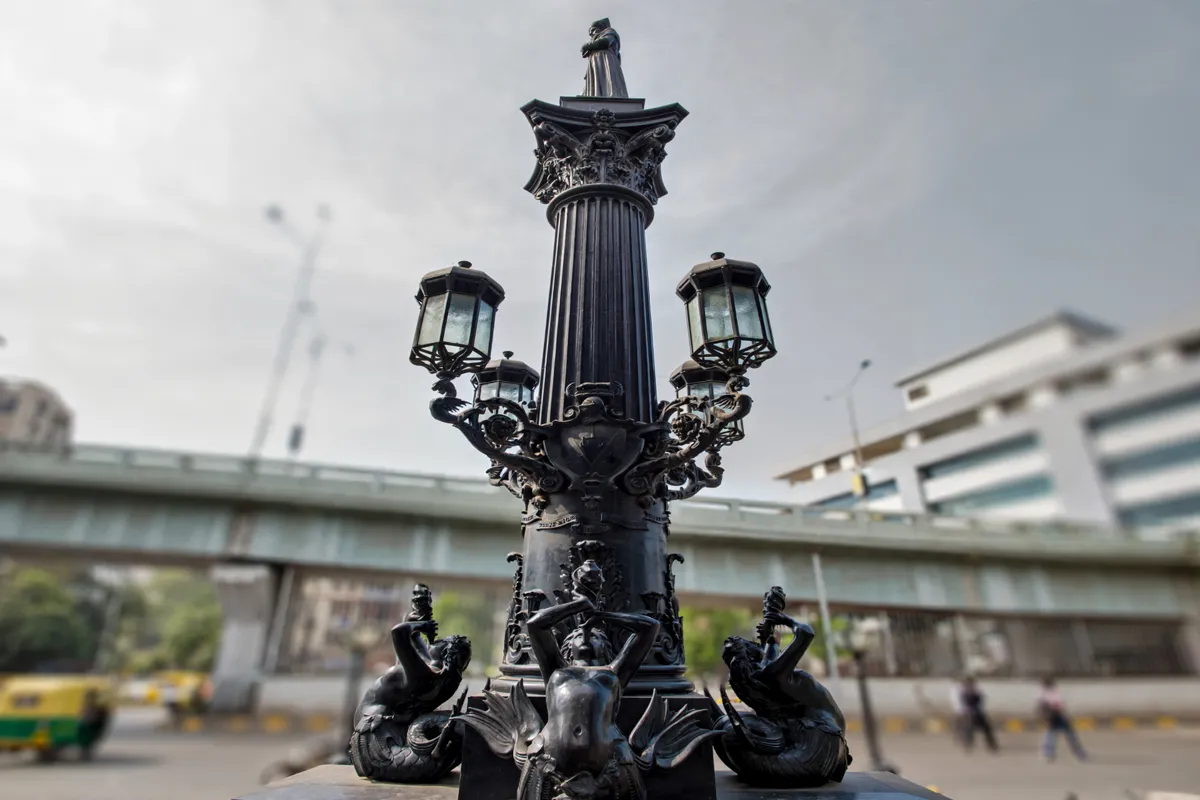
Khada Parsi commemorates Shet Cursetjee Manockjee, a Parsi community leader and philanthropist who lived from 1763 to 1845. The Maharashtra heritage study also calls the landmark the Cursetjee Manockjee Statue and Fountain and records it as entry 625, “KHADA PARSI STATUE.”
The monument’s bronze statue stands on a fluted Corinthian pillar, in a Neo-Classical design. The figure depicts Cursetjee Manockjee in Hindu dress, holding a copy of the Avesta sacred scriptures. Partway up the column, four lanterns sit on ornate brackets; at the base, four mermaid figures blow conch shells.
The inscription on the main column reads “Trust in God and be not daunted.” The heritage study attributes the statue to John Bell of London and says the figure of Ceres in the fountain’s original design was replaced by Cursetjee’s statue.
Where can you find the monument?
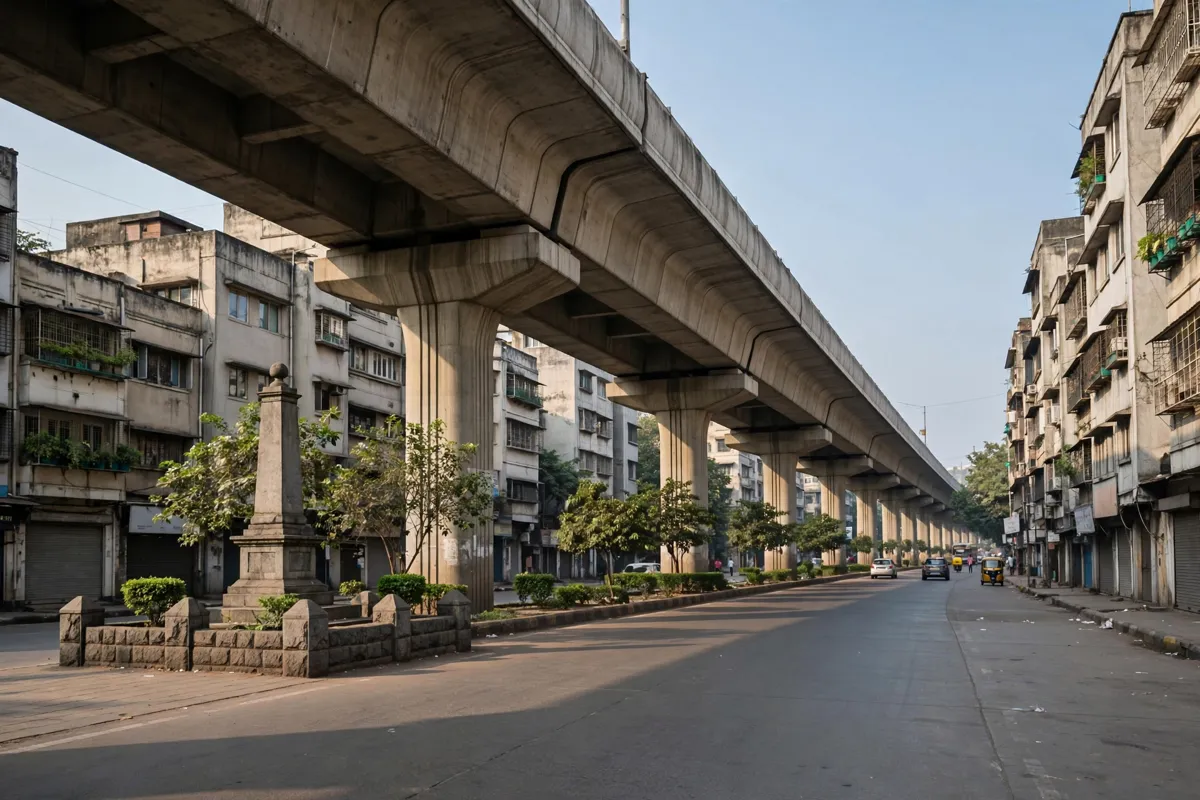
Khada Parsi stands in Byculla, Mumbai—not in Dadar. The Maharashtra State Gazetteer places the Curshetjee Manekjee statue, another spelling used in the record, along the route from Race Course to Mahim Causeway. Byculla railway station is one of the landmarks the Gazetteer identifies along that route.
For broader context, the Gazetteer describes Senapati Bapat Marg, formerly called the Tulsi Pipe Line, as running from Race Course through Chinchpokli, Worli, Prabhadevi, Dadar and Mahim. It gives the route’s length as about 8.5 km. Hotel Happyland is about 21 minutes on foot or 7 minutes by car from Shivaji Park, one of the landmarks on the route.
How should you approach a short visit?
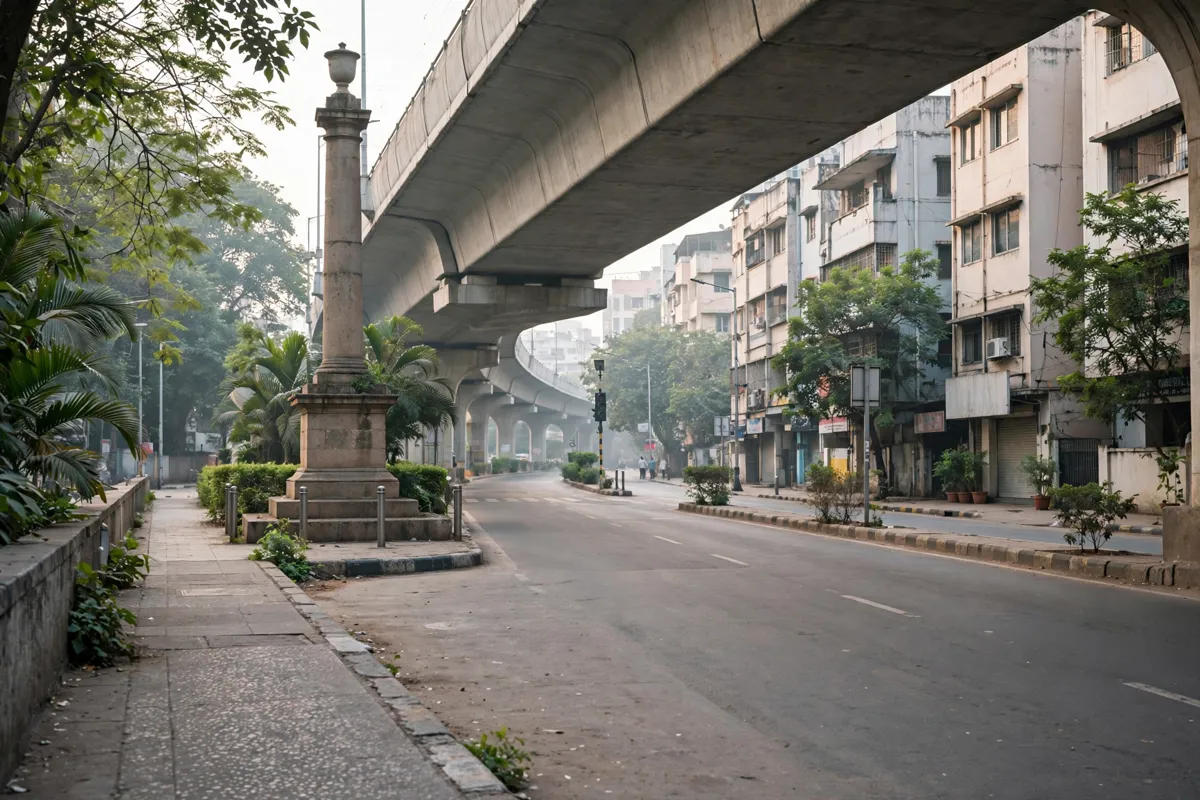
Use a brief stop to look at the monument as a whole, then take in its details: the statue and pillar, the lanterns, the figures at the base and the inscription. The heritage study records that a flyover altered the surrounding streetscape and diminished the monument’s former dominance, so its setting is part of the story too.
The study says the statue once crowned a public plaza at Byculla. A new flyover later dwarfed it and changed its former scale. The monument’s urban integrity and prominent position in the streetscape also suffered after flyover construction.
Before you go, check the official site before you go.
What historical context can you check?
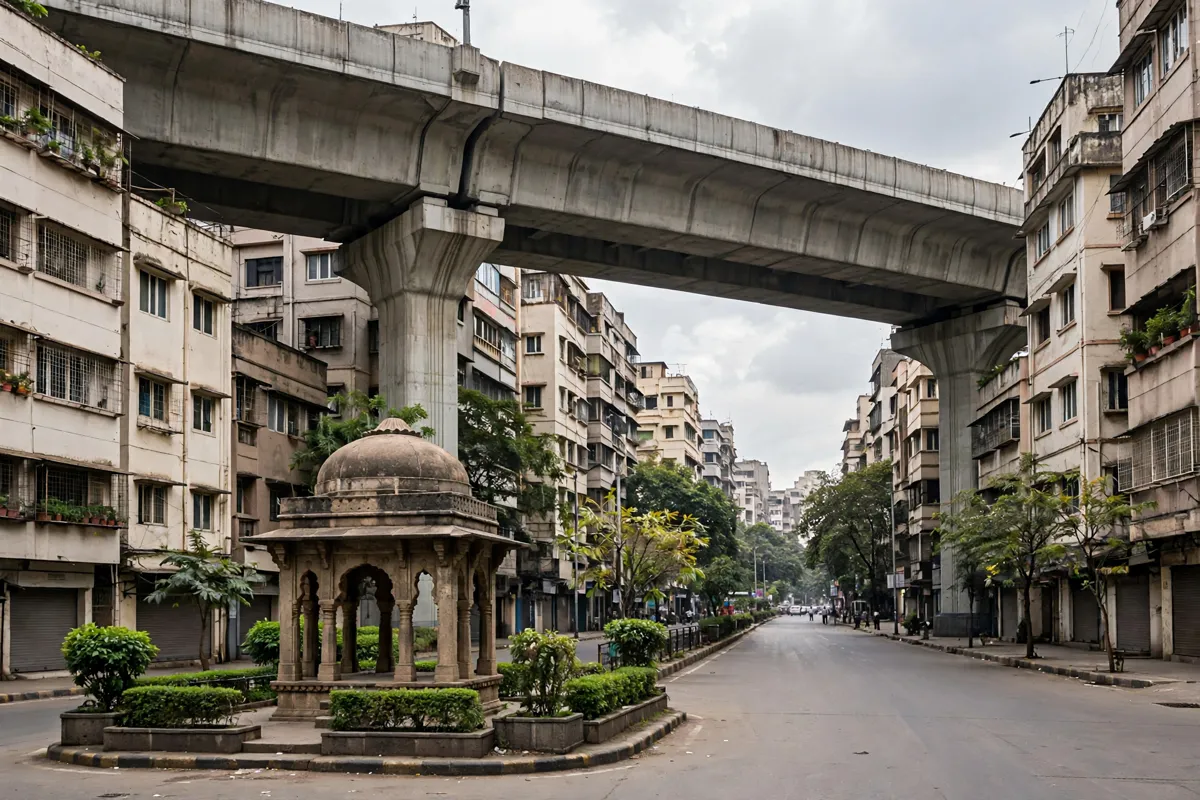
The Maharashtra heritage study links the fountain’s design to a commission by Manockjee Cursetjee, the youngest son of Cursetjee Manockjee. He commissioned a duplicate of a fountain he had seen at the Universal Exhibition for Rs 20,000.
That account helps connect the monument’s sculptural form with its commemorative purpose. For more context beyond this single landmark, Mumbai history and historic places provides a wider frame for local landmarks near Dadar.
What can you pair with a visit?
The Gazetteer’s Race Course-to-Mahim route includes several other named landmarks: Shivaji Park, the Portuguese Church and Mahim Fort. They belong to the broader route, rather than being described as next-door stops to Khada Parsi.
Sewri Fort is another Mumbai landmark with its own waterfront setting and history. You can plan it as a separate stop using this Sewri Fort visit guide.
FAQs
Is Khada Parsi in Dadar?
No. Khada Parsi is in Byculla, Mumbai. Dadar appears on the wider route described in the Maharashtra State Gazetteer.
Who does the monument commemorate?
It commemorates Shet Cursetjee Manockjee, a Parsi community leader and philanthropist.
What is the statue made of?
The monument includes a bronze statue atop a fluted Corinthian pillar. The heritage study describes its style as Neo-Classical.
What does the inscription say?
The inscription on the main column reads “Trust in God and be not daunted.”